Liability in California Motorcycle Lane Splitting Accidents
California is the only state in America where motorcycle lane splitting is legally permitted. Although this recognition came with the passage of Assembly Bill 51 (Vehicle Code – VEH § 21658.1) in 2016, after an accident, most insurance companies still try to portray lane splitting as "reckless behavior" in an attempt to reduce the rider's compensation. After an accident, their adjusters typically call in a sympathetic voice asking for a recorded statement, try to hand you a quick small check, and later attempt to use every word you say against you. Before falling into this insurance company trap, here's what you should know:
- What is lane splitting?
- What are the common causes of lane splitting motorcycle accidents in California?
- Who is at fault in a lane splitting motorcycle accident in California?
- The insurance company playbook against lane-splitting riders
- How does Comparative Negligence affect your claim?
- What types of evidence prove fault in lane splitting accidents?
- When should you consider a motorcycle accident attorney?
In today's blog, we will discuss these topics in detail. So without wasting any time, let's get started.
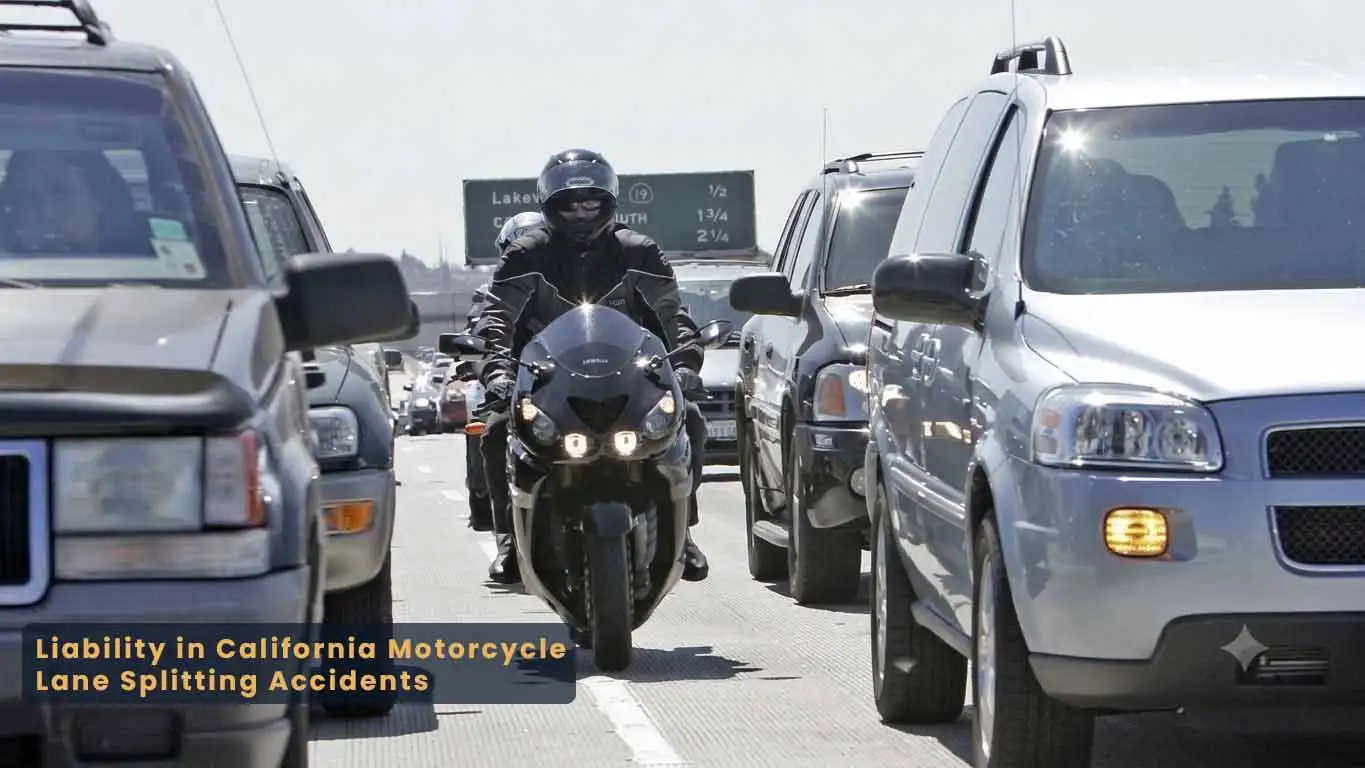
What Is Lane Splitting?
Lane splitting is riding a motorcycle or bicycle between two lines of slow-moving or traffic-jammed vehicles to move ahead. It is also sometimes called "whitelining" or "stripe-riding."
Characteristics and benefits of lane splitting
- Avoiding traffic congestion: When cars in a traffic jam are moving slowly or standing completely still, motorcycle riders can use the empty space between two vehicles to move forward.
- Increased safety: According to many experts, lane splitting reduces the risk of being rear-ended by a vehicle behind you, compared to waiting in line behind cars in a jam.
- Speed: It is generally not done at more than about 10 mph faster than the speed of surrounding traffic.
Common Causes of Lane Splitting Motorcycle Accidents in California
Although motorcycle lane splitting is legally permitted in California, it is quite risky. The common causes of lane splitting motorcycle accidents in California are listed below:
Car Drivers' Carelessness and Poor Decisions
- Sudden lane changes: Car drivers change lanes abruptly without properly checking their rear-view mirror or blind spot. This is the single biggest cause of lane splitting accidents.
- Opening the car door (dooring): While stuck in traffic, when drivers or passengers suddenly open the car door without looking behind them, motorcycle riders suffer serious accidents.
- Distracted driving: While stuck in traffic on California's highways, drivers are busy using their mobile phones or with other activities and fail to notice a motorcycle passing beside them.
Motorcycle Riders' Speed and Carelessness
- Excessive speed differential: Accidents occur when the motorcycle's speed is much higher than the speed of surrounding vehicles. According to California Highway Patrol (CHP) guidelines, lane splitting at more than 10 mph faster than surrounding traffic is not advisable.
- Lack of experience: Inexperienced riders often cannot accurately judge the narrow space or distance between two vehicles, resulting in collisions with vehicles alongside them.
- Violating recommended speed limits: When traffic is moving faster than 30 mph, lane splitting becomes extremely dangerous. At high speeds, the rider does not have enough time to react.
Road and Environmental Conditions
- Dangerous road conditions: Potholes, gravel, road cracks, and slippery surfaces disrupt a motorcycle's balance during lane splitting.
- Blind spots of large vehicles: Large trucks, buses, or commercial vehicles have very large blind spots. When lane splitting past them, drivers cannot see the motorcycle at all.
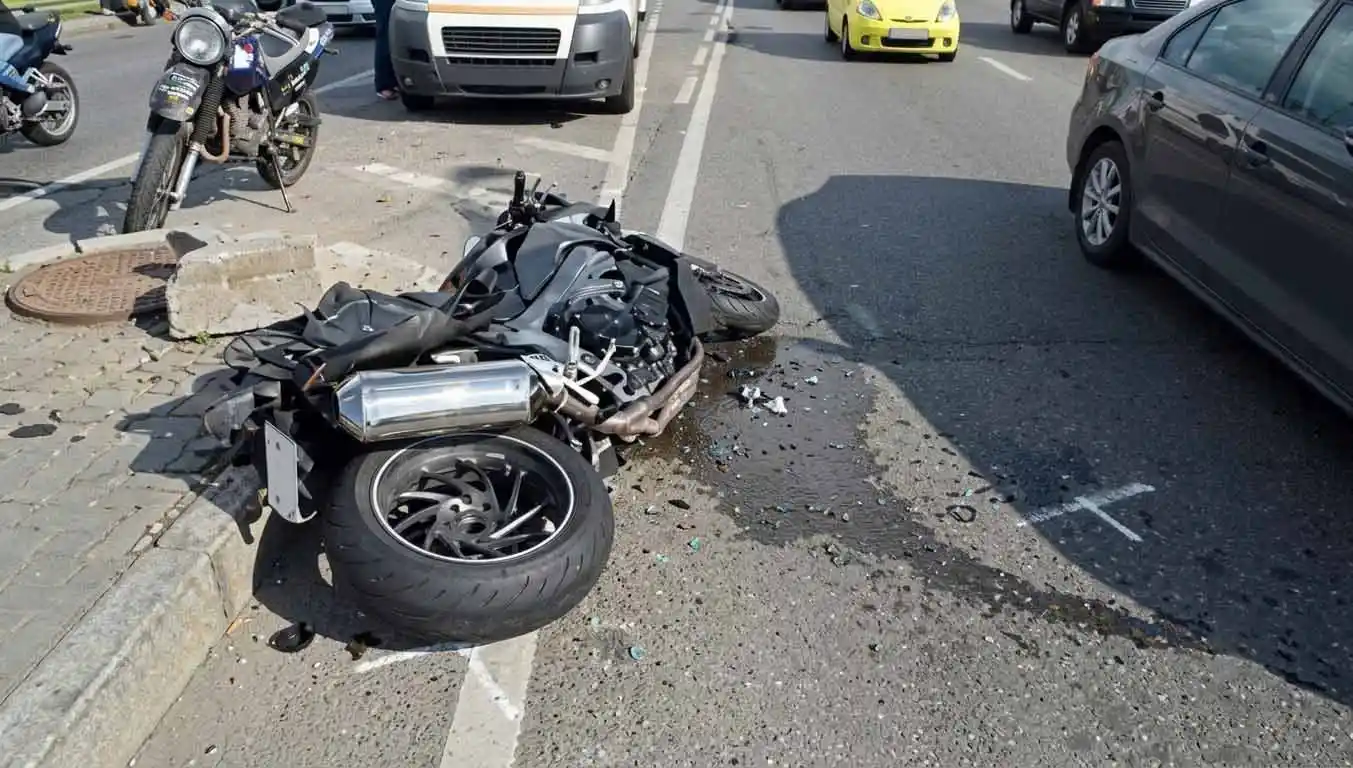
Who Is at Fault in a Lane Splitting Motorcycle Accident in California?
Lane splitting is legally permitted in California, so after an accident, the motorcycle rider cannot automatically be found at fault. Liability or fault for the accident is determined mainly based on whose negligence was greater and who was driving or riding unsafely.
Under California's Pure Comparative Negligence rule, both parties can share fault to varying degrees in an accident. Below is a discussion of how much fault each party may bear in different situations:
When the Car Driver Is at Fault
These accidents usually happen due to car drivers' carelessness in traffic. In the following cases, full fault generally falls on the car driver:
- Changing lanes without signaling: When a driver suddenly changes lanes without using an indicator or signal.
- Failing to check blind spots: Changing lanes without looking at the rear-view mirror or checking blind spots.
- Suddenly opening the car door: Opening the car door in traffic without checking for traffic behind (dooring).
- Intentionally blocking the path: Deliberately squeezing the lane or swinging the car to deny the motorcyclist space.
- Distracted driving: Texting, talking on the phone, or being otherwise inattentive.
When the Motorcyclist Is at Fault
Although lane splitting is legal, it must be done safely. The motorcyclist's fault can be established in the following situations:
- Excessive speed: Lane splitting at a speed much higher than surrounding traffic (e.g., 15–20 mph faster or more).
- Reckless riding: Riding dangerously by repeatedly weaving through traffic.
- Splitting in non-approved areas: Sharing lanes in unsafe or narrow spaces other than the far-left lane (fast lane) of the highway.
Shared Fault
In most lane splitting accidents in California, both parties are found partially at fault. If a car driver changes lanes without signaling, that is the driver's fault; but if, at the same time, the motorcyclist was lane splitting at a speed much faster than recommended, that is the motorcyclist's fault.
If the court or insurance company determines that the car driver is 70% at fault and the rider is 30% at fault, then 30% will be deducted from the total compensation. In other words, if the motorcyclist is entitled to $10,000 in compensation, they will receive $7,000.
How fault is proven
- Police report and officers' opinions
- Video footage from the motorcycle's dashcam or helmet camera
- Statements of witnesses present at the scene
- Tire brake marks on the road and the pattern of vehicle damage (accident reconstruction)

The Insurance Company Playbook Against Lane-Splitting Riders
Even though California law protects motorcycle riders in lane-splitting accidents, insurance companies use certain specific tactics, or a "playbook," to reduce or completely deny compensation. Taking advantage of California's Comparative Negligence law, they try to shift the entire blame onto the rider.
The insurance companies' main tactics are listed below:
Creating the Narrative That "Lane Splitting Means Reckless Riding"
Companies argue that although lane splitting is legally permitted, it is an extremely "risky behavior." They try to prove that the rider knowingly put themselves in danger. They claim that if the rider had stayed behind the cars in a regular lane, the accident would never have happened.
Weaponizing the Speed Differential
According to California Highway Patrol (CHP) guidelines, lane splitting at more than 10 mph faster than surrounding traffic is not advisable. Insurance adjusters will claim the rider's speed was far higher than the traffic. They will argue that because of excessive speed, the rider did not have enough time to brake or avoid the accident, so the fault lies with the rider.
Trying to Prove the Rider's Comparative Fault
Companies know they may not be able to escape the car driver's fault 100%. So they try to pin 20% to 50% of the blame on the rider. The more fault they can shift onto the rider, the less compensation the insurance company has to pay. That is why they try to assign blame to reduce compensation.
Using the Recorded Statement as a Trap
Immediately after the accident, the insurance company will call the rider and ask for a recorded statement. The rider may be traumatized or on pain medication at that time. They will phrase questions in a way that extracts statements from the rider like "I didn't see the car coming" or "I was in a bit of a hurry." Later, these very words are used as evidence of the rider's carelessness.
Highlighting Delayed or Neglected Medical Treatment
If the rider does not go to the hospital or see a doctor immediately after the accident, the company will claim the injury was not caused by the lane splitting incident but by some other cause. If the rider already had back or neck pain, they will claim that this pain is pre-existing and that no new injury was caused by the accident.
Social Media and CCTV Scrutiny
Companies will check the rider's Facebook, Instagram, or YouTube profiles. If the rider has posted any photos or videos of riding at high speed in the past, that may be presented in court as evidence of the rider's "usual behavior."
Do not give any recorded statement to the insurance company after the accident. Preserve helmet camera or dashcam video footage. Consult an experienced personal injury attorney before signing any document.
How Comparative Negligence Affects Your Claim
Under California's Pure Comparative Negligence law, even if you were partially at fault or negligent in an accident, you are still entitled to compensation. However, your total compensation will be reduced based on the percentage of your fault. Here is an analysis of how this law affects your lane-splitting insurance or legal claim:
Your Compensation Is Directly Reduced
After the accident, the court or insurance company determines the degree of fault of both parties, and an amount equal to your percentage of fault is deducted from your total compensation.
Suppose your total financial damages are determined to be $100,000. The investigation finds that the other car's driver changed lanes without signaling, so their fault is 80%. But you were also lane splitting slightly faster than the recommended speed, so your fault is 20%. Because of the comparative negligence law, you will receive 80% of the total, i.e., $80,000. The remaining 20% ($20,000) will be deducted for your own fault.
You Receive Compensation Even If Your Fault Is High
California's law is "pure," meaning even if you are 99% at fault for the accident, you can still claim the remaining 1% in compensation from the other party. In many other states, no compensation is available if your fault exceeds 50% or 51%, but California has no such strict rule.
The Insurance Company's Bargaining Tool
Insurance companies take advantage of this law and try their utmost to artificially inflate your fault percentage.
If they can raise your fault from 0% to 30%, they have to pay 30% less money. For this reason, they will scrutinize your speed, road conditions, and whether you made any mistake in painstaking detail.
It Raises the Importance of Gathering Evidence
Since thousands of dollars in compensation depends on even a 1% shift in your fault, this law makes evidence collection extremely important. The following evidence helps reduce your fault and maximize your compensation:
- Helmet camera video: Which will prove you were lane splitting at a safe speed and with caution.
- Police report: Which will clearly note the other driver's traffic violation.
- Witness statements: Which will prove the other driver changed lanes without any signal.

What Types of Evidence Prove Fault in Lane Splitting Accidents?
To determine each party's fault percentage in a lane splitting accident in California, insurance companies, police, and courts rely mainly on tangible evidence. The following types of evidence play the most important role in reducing the motorcyclist's own fault and proving the other driver's negligence:
Video and Digital Evidence
The rider's helmet camera or the bike's dashcam captures the most accurate picture of the accident. It proves whether the rider was at a safe speed and whether the other car suddenly changed lanes. In addition, highway traffic cameras, security cameras of nearby shops, or video recordings from other vehicles can reveal the real cause of the accident.
Police Report
After the accident, the California Highway Patrol (CHP) or local police who arrive at the scene prepare an official report. If the report notes that the car driver changed lanes without signaling or was busy on the phone, it becomes the strongest basis for proving the driver's fault.
Physical Evidence at the Scene
Tire skid marks on the road indicate how fast each vehicle was going and exactly how long before the accident the brakes were applied. In addition, analyzing exactly where the motorcycle and car were struck can determine the angle and circumstances of the crash. For example, if the impact is on the side door rather than the rear of the car, it usually proves the car was suddenly changing lanes.
Witness Statements
The statements of other drivers, passengers, or pedestrians nearby at the time of the accident are extremely valuable. If they confirm that the motorcycle was traveling at a normal speed and the car suddenly turned without checking its blind spot, it becomes easier for the rider to get a favorable verdict.
Electronic Data on the Motorcycle's Speed and Position
The digital logs of the rider's GPS device or riding apps (e.g., Strava, Rever) can prove the exact speed at the moment of the accident. This helps dismiss the insurance company's false claim of "excessive speed."
Expert Opinion (Accident Reconstruction Expert)
In complex cases, accident reconstruction experts analyze scientific formulas, kinematics, and road data to create a 3D animation or report, which is considered conclusive evidence in court for determining fault.

When to Consider a Motorcycle Accident Attorney
Because of California's complex lane splitting laws and insurance companies' tactics, consulting an experienced attorney after most motorcycle accidents is the wise thing to do. However, you should especially consider a motorcycle accident attorney in the following situations:
If You Suffer Serious Physical Injuries
If you have broken bones, a head injury, severe road rash, or require surgery. Or if your injury will require physiotherapy or long-term medical treatment in the future, an attorney can calculate all your future expenses and demand compensation accordingly.
If the Insurance Company Blames You
If, taking advantage of California's comparative negligence law, the insurance company claims that you were also partially at fault in the accident (e.g., you were lane splitting too fast) and wants to cut your compensation. In that case, an attorney's legal fight is essential to bring your fault percentage down to the minimum.
If the Insurance Company Denies Your Claim or Offers Less Money
If the insurance company hastily offers you a check for a very small amount right after the accident and asks you to sign an agreement, this money is usually far less than your actual medical costs. Or if they cancel your entire insurance claim on some flimsy excuse. In that case, you should consult an attorney to get your rightful compensation.
When Gathering Evidence Becomes Complicated
If there is no clear CCTV footage of the accident and the car driver denies their fault, then there is no alternative to consulting an attorney. Moreover, you need an attorney's help to recover video footage from nearby shops or traffic cameras through legal notice (subpoena) and to hire accident reconstruction experts.
Loss of Working Capacity or Lost Wages
If, due to the injuries from the accident, you cannot go to work for several weeks or months and your regular income stops. Or if the injury is so severe that you will never be able to work as before, then you should consult an experienced attorney to claim compensation for your loss of earning capacity.
If the Other Driver Does Not Have Adequate Insurance
In California, many drivers carry only minimum insurance, or some carry none at all. In this situation, legal strategy is needed to recover the maximum amount from your own insurance company. So in this case, you should consider an attorney.
Conclusion
Although lane splitting is legally permitted in California, determining liability after an accident can be quite complicated. Taking advantage of the Comparative Negligence law, insurance companies try to place partial or full blame on the rider in almost every case. Because the higher the rider's fault percentage, the lower the compensation they have to pay. In this reality, the most important things for a lane-splitting accident victim are: not to make any statement emotionally or in haste right after the accident, to preserve as much evidence as possible, and to consult an experienced personal injury attorney before signing any document.
It is important to remember that under California's Pure Comparative Negligence law, no matter how high the degree of fault, a rider is never completely deprived of the compensation they deserve. Therefore, instead of giving in to the insurance company's initial offer or pressure, the wisest thing for a victim to do is to secure the fair compensation they deserve through proper legal assistance.