What Happens If You Hit a Pedestrian With Your Car in California?
An accident is a small word, but its horror is far greater. Every accident takes away countless lives, countless
dreams of survival. After an accident, countless possibilities are destroyed. Car accidents in California have now
become an everyday occurrence. If it ever happens that you're driving down the road in your own way, and suddenly, due
to a moment of carelessness, you hit a pedestrian with your car, that moment will be extremely painful for both you
and the person who got injured.
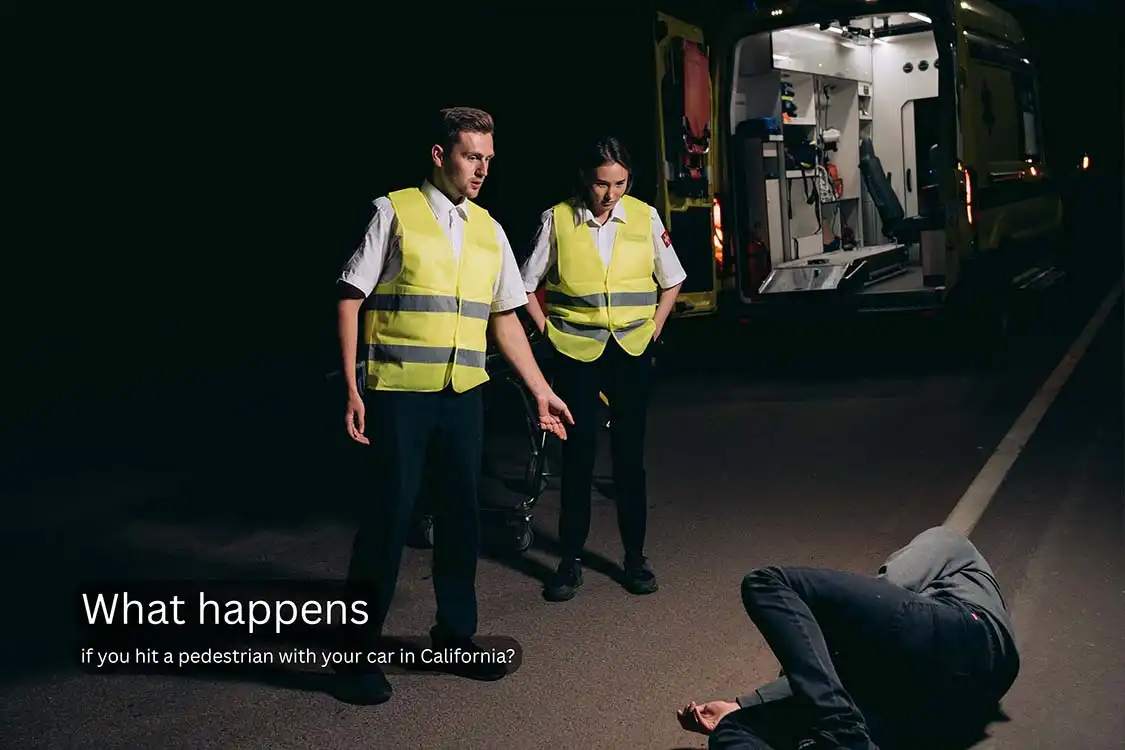
For the injured person, it will naturally be painful because they are hurt. And for you, it will be painful because
you may keep blaming yourself for the accident in your mind, since you may not know the legal aspects related to
pedestrian accidents in California. Or perhaps you've never faced such a situation before. So it's very natural to
panic in this situation! To get through this, you need to follow certain things while driving and stay alert in
certain cases, you need to know some laws.
In today's blog, we will discuss in depth the legal aspects related to pedestrian accidents in California. Why do
accidents happen, who can be held liable in a pedestrian injury case in California, what is the legal process after an
accident, and what role do witnesses play? We will discuss all these topics step by step. If the question "What
happens if you hit a pedestrian with your car in California?" has ever crossed your mind, then this blog is for you.
What Causes Pedestrian Accidents in California?
California is one of the most densely populated and car-dependent states in the United States. Here, there are narrow
urban alleys in some places, and tourist-packed coastal roads in others. On one hand, there's a vast highway network,
and on the other, busy sidewalks and crosswalks at the heart of cities. Most pedestrian accidents are born from the
collision of these two realities. There are mainly three primary reasons why accidents with pedestrians occur in
California. First, human error. Second, structural flaws in the road. Third, environmental conditions.
Driver carelessness is seen as the biggest cause. Due to talking on the phone, sending text messages, or simply
becoming distracted, a driver fails to see a pedestrian in time. Alongside this, excessive speed, driving erratically
without staying in a designated lane, and ignoring traffic signals also accelerate accidents. Reduced visibility due
to low light at night, or roads becoming slippery during rain, also increase the risk of accidents.
Again, sometimes there are problems in the road design itself. City infrastructure isn't always pedestrian-friendly,
many roads lack adequate lighting, some areas have fewer crosswalks than needed, crosswalks have insufficient
lighting, traffic signal timing is faulty, or there's a lack of safe crossing for pedestrians. All of these can also
be responsible for accidents. In urban areas where vehicle and pedestrian movement happen together, this risk is
naturally higher.
Read More
-
Injured by an Uninsured Driver in California: Your Rights & Options
-
California Parking Lot Accidents: Hidden Dangers and Liability
-
Uber or Lyft Accident in California — Who Pays and How Do You Claim?
Who Is Liable for a Pedestrian Accident in California?
This question lingers in many people's minds, and the answer isn't as simple as it might first seem. Under California
law, liability is determined based on "negligence." That is, liability is determined by judging who failed to maintain
reasonable caution.
In most cases, the driver of the car is held liable, because under the law, drivers must always exercise special
caution toward pedestrians. Moreover, the driver himself can be held liable if it's proven that he violated the speed
limit, lost attention, or didn't follow traffic laws. But beyond this, several other parties can also be held liable.
For example, if the accident happens due to some mechanical fault in the car, such as brake failure, then the car
manufacturer or the repair company can also be held liable.
Again, if there's a flaw in the road design, such as inadequate lighting, broken sidewalks, or a faulty traffic
signal, then the relevant government authority can also be held liable. In some cases, an employer can also be held
liable, if the accident is caused by a driver who was driving while performing his job duties.
Sometimes the pedestrian can also be held liable for the accident, if it's proven that the pedestrian was also
responsible in some way for the accident, for instance, if they crossed the road without using a crosswalk or ignored
a traffic signal. Then their compensation amount can be reduced proportionally. For example, if a pedestrian is found
20 percent liable for the accident, then their final compensation will also be reduced by that 20 percent.
Situations where a pedestrian may be at fault
-
Violating traffic signals or traffic rules: If a pedestrian crosses the road while the light is red, or suddenly steps onto the road outside of a designated crosswalk, this can increase their liability. According to California DMV Laws and Rules of the Road, pedestrians also have an obligation to follow certain rules, especially where signal systems exist.
-
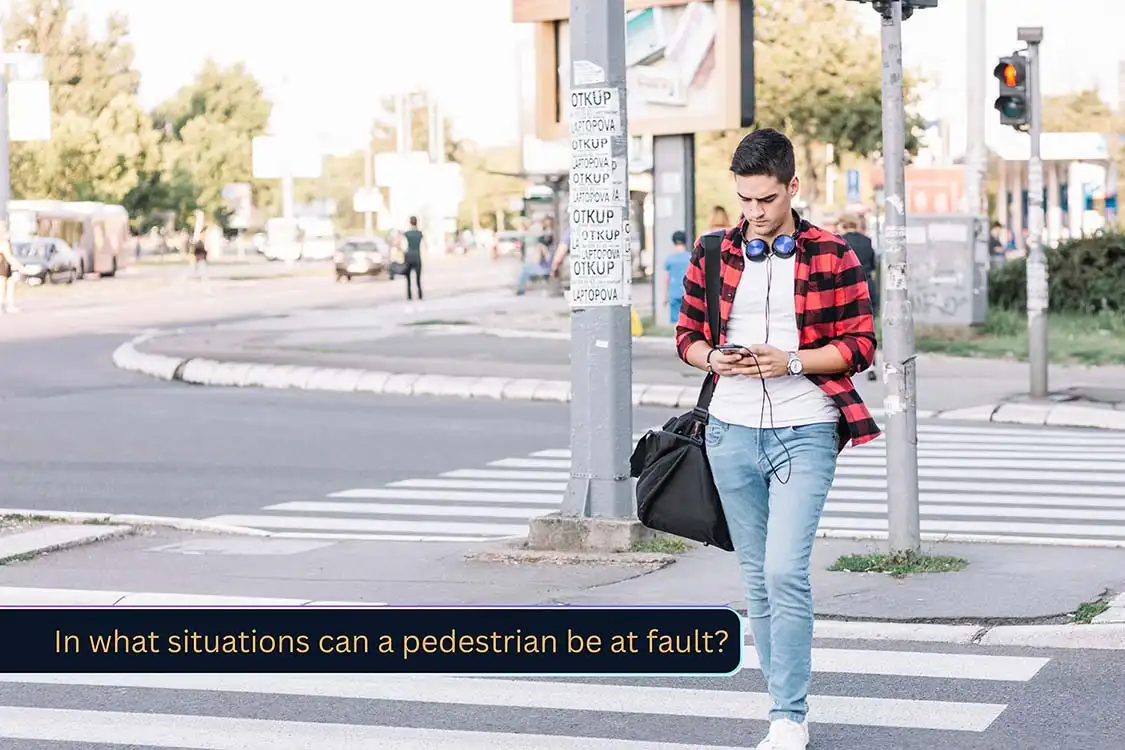
Walking while distracted or using a mobile phone: Nowadays, "distracted walking" is a growing problem. Many people, while looking at their mobile phones while walking, don't notice the surrounding traffic conditions, making it impossible to avoid a suddenly approaching car. If such inattentiveness is proven, partial liability may also fall on the pedestrian.
-
Walking while intoxicated: Not just drivers, pedestrians who are intoxicated are also at risk. Under the influence of alcohol, judgment and reaction ability decrease, increasing the chance of making wrong decisions while crossing the road.
-
Walking in prohibited or dangerous areas: Walking on highways or in areas where pedestrian movement is prohibited can also create legal liability. Such areas are generally built for high-speed vehicles, where the presence of pedestrians is extremely risky.
How traffic laws apply in pedestrian accident cases
California's vehicle code has established specific duties and responsibilities for both pedestrians and drivers. The
rules for drivers are: giving priority to pedestrians in crosswalks, following the designated speed limit, and
exercising special caution in school zones or residential areas.
On the other hand, pedestrians also have certain legal responsibilities, such as using available crosswalks, following
traffic signals, and not suddenly stepping in front of a car. When an accident occurs, investigators and courts judge
how much each party was at fault in light of these rules. This is why having a clear understanding of traffic laws can
play an important role in the outcome of a claim.
Read More:
-
How Much Compensation Are You Entitled to After a Car Accident in California?
-
What Are the Legal Risks After an At-Fault Car Accident in California?
-
What Happens If You Hit a Cyclist with Your Car in California?
What you should do after hitting a pedestrian in California
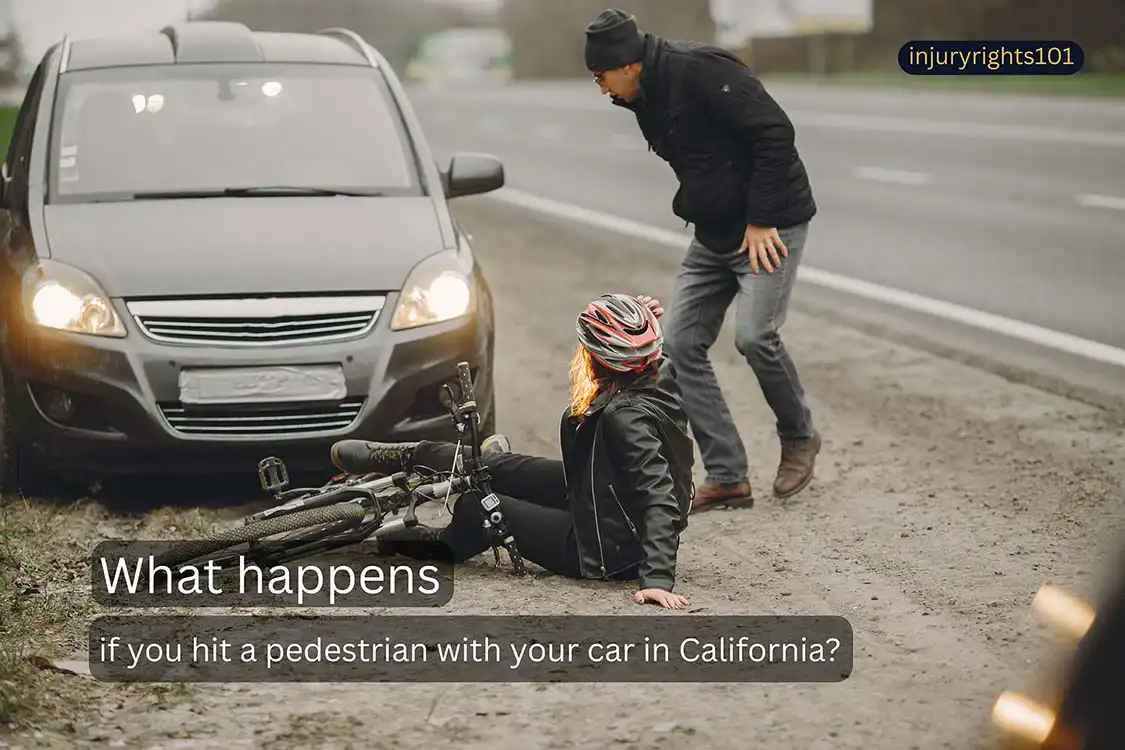
If you unfortunately hit a pedestrian, it's extremely important to follow a few key steps. First, stop your car
immediately and stay at the scene. Under California law, fleeing the scene of an accident is a serious crime, which
can lead to criminal charges.
Second, immediately call emergency services and call the police and an ambulance, even if the injury seems minor.
Often the true extent of an injury isn't immediately apparent, and it can later become serious. Third, try to help the
pedestrian, but don't tell them to move or force them to move, because if there's an internal injury, it could get
worse.
After the police arrive, cooperate with them and give an accurate account of the incident, but refrain from making any
comments that admit fault. This can create legal complications later. If possible, take photos of the accident scene,
collect witness information, and inform your insurance company promptly.
Finally, contact an experienced personal injury lawyer. They can help you understand the legal process, protect your
rights, and take the necessary steps. Remember, the moments right after an accident often determine the direction of
the entire case, so taking the right steps is extremely important.
Conclusion
Pedestrian accidents are a complex and sensitive matter, where legal, medical, and psychological aspects are all intertwined. Although California law provides detailed guidance on this matter, every incident's circumstances can be different. What happened to someone else may not happen to you. But the law is equal for everyone. So having an understanding of California law beforehand can free you from a lot of unnecessary worry and protect you from unexpected mistakes. Therefore, if you ever face such an accident, it will always be wise to consult an experienced lawyer.